The short version
A sequel that had every excuse to play it safe and instead rebuilt the formula around resource magic, nighttime witchcraft, and two full parallel routes. It doesn't hit quite as hard as the first game's ending — few things do — but the run-to-run loop is the best Supergiant has ever built, and the studio remains the only one that makes dying feel like the plot moving forward.
Story
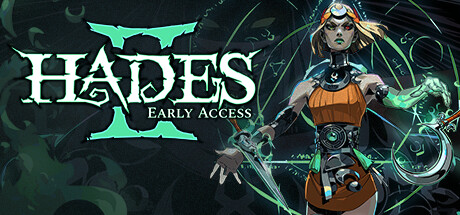
Melinoë, princess of the underworld and professional witch, is hunting Chronos — the Titan of Time, who happens to be her grandfather and happens to have imprisoned her entire family. Where Zagreus was a rebellious son punching upward, Melinoë is a soldier raised for a single purpose, and the game mines real melancholy from a childhood spent training instead of living.
The structure will be familiar: die, return home, talk to everyone, notice that every single character has something new to say. What's new is the sense of a war being fought on two fronts. The crossroads hub fills with refugees and allies as the story advances, gods drop in with gossip and grudges, and the nightly rhythm of incantations at the cauldron gives progression a witchy, ritual texture the first game never had.
Gameplay
The Magick meter changes everything. Every weapon now has a normal kit and a channeled Omega kit — slower, more expensive, screen-clearing — and learning when to stand still and cast instead of dodging is the skill curve the entire game balances around. It makes Melinoë feel deliberate where Zagreus felt frantic, and once it clicks, going back to the first game feels like missing a limb.
Arcana cards replace the mirror with an actual build-defining choice: a grid of tarot upgrades where activating one card can lock out another. Boons are chunkier and more build-warping, the new gods (Hestia's burn, Hephaestus's anvil blasts) slot in like they were always there, and the surface route means a "run" can head in two completely different directions from the very first chamber — up toward Olympus or down toward Tartarus, with different bosses, resources, and story beats on each path.
If we're sniffing for flaws: the early hours lean hard on resource gathering. Unlocking tools, then using tools to gather materials, then spending materials on incantations puts a light farming-game loop in front of the action, and not every player will love picking herbs between boss fights.
Best-in-class, again. The character art is somehow a step up from a game that already looked like a graphic novel come to life, the underworld glows in greens and purples where the first game burned red, and Darren Korb's soundtrack finds a witchier, folkier register that we've had on loop since. Performance is flawless — this thing would run on a toaster and look good doing it.
Craft — 9.2
The Omega system, the arcana grid, and the dual-route structure are all confident, interlocking design. The resource grind in the opening stretch is the one place the machinery shows.
Hold — 8.9
Sixty-four hours in, we were still unlocking weapon aspects and still getting new story scenes every single night. The fear ("heat") system scales the challenge for hundreds of hours if you want it. The only reason this nostril isn't fuller: the final confrontation, while good, doesn't reach the emotional peak the first game's true ending set — and we kept waiting for it to.
The verdict
Herd approved without hesitation. The trough is deep on this one — bring a lantern, and don't plan anything for the weekend.