The short version
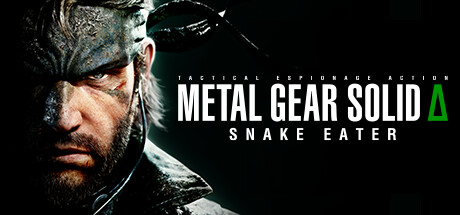
One of the greatest stealth games ever made, rebuilt in Unreal Engine 5 and handled with reverence bordering on fear. Metal Gear Solid Δ is Konami and Virtuos's 1:1 remake of the 2004 classic — the same script, the same voices, the same story, wrapped in gorgeous modern visuals and MGSV-derived controls. It is, without much argument, the definitive way to play Snake Eater. It's also so afraid of touching a masterpiece that it leaves some of the original's old bones showing right through the new skin.
Story
It's 1964, the Cold War at its peak. You are John — codename Naked Snake — dropped into the Soviet jungle to extract a defecting scientist and, when things go catastrophically wrong, to hunt down your own mentor. What follows is still one of gaming's finest scripts: a spy thriller about loyalty, patriotism, and betrayal that builds to an ending capable of reducing grown players to silence. The story is completely unaltered here, and it did not need a single change — twenty-plus years on, The Boss remains one of the medium's great tragic figures.
The flip side of that fidelity is Kojima at his most Kojima: three-plus hours of cutscenes by default, codec calls that overexplain things with no bearing on the plot, and tonal swings from harrowing to cartoonish within a single scene. If that was never your thing, Delta won't convert you. If it was, it's heaven.
Gameplay
This is where the remake earns its existence. Delta grafts MGSV's control scheme onto Snake Eater — over-the-shoulder aiming, crouch-walking, fluid cover transitions, tighter gunplay — and for the first time the game actually plays the way nostalgia insists the original did. Sneaking is no longer stiff, firefights aren't punishment, and the survival systems (camo swapping, the CURE injury menu, hunting the jungle for food) now flow instead of interrupting. A real-time camo and face-paint menu is a small, brilliant quality-of-life win. Veterans can flip to a Legacy control style; newcomers get New Style. Everyone's served.
The tension the remake can't fully resolve is that the levels, patrols, and enemy AI are still calibrated for 2004. Give a player modern movement and an over-the-shoulder camera in environments designed around clunkier tools, and some patrols stop being threatening — a stretch of the game becomes trivially easy, and a couple of bosses lose their bite. The legendary encounters mostly survive intact — The End's sniper duel is still transcendent, The Sorrow still unforgettable — but the moment-to-moment stealth occasionally feels like a modern engine idling in a vintage chassis.
The headline. Unreal Engine 5 turns the jungle into an actual character — dense, wet, alive, with light filtering through canopy and mud that clings. It's frequently breathtaking, and the 3D audio work makes the environment hum. It's not flawless: loading screens are more frequent than a 2026 remake should have, and technical optimization has some rough edges on certain hardware, but at its best this is a genuine showcase.
Craft — 8.9
Superb modern controls and a stunning visual overhaul welded to level and encounter design the remake was too reverent to modernize. The gap between the new movement and the old spaces is the only thing keeping this out of the 9s.
Hold — 8.6
Thirty-three hours across a main run and a stealth-focused replay, and the impulse to go again — no-kill, no-alert, Legacy controls — is strong, because the systems are that good to inhabit. It holds like a great single-player campaign holds: not forever, but memorably, and it's the kind of game you reinstall every few years.
The verdict
Herd approved, both nostrils in the tall grass. If you've never played Snake Eater, there has never been a better time or a better version — just get it. If you have, this is the classic looking and playing better than ever, asking only that you forgive it for loving the original a little too much to change it.