The short version
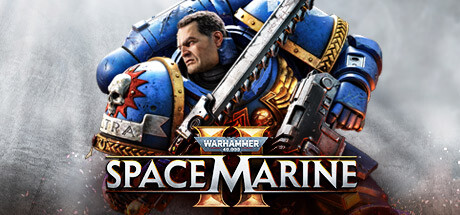
The loudest power fantasy on the market, and the rare licensed game that actually feels like the thing it's licensing. Space Marine 2 understood that a Space Marine should feel less like a soldier and more like a tank with opinions — and then it spent two years quietly turning a good campaign into a genuine live game while nobody was watching.
Story
Titus is back, a century after the first game, demoted, distrusted, and dropped onto Kadaku as the Tyranid swarm eats the sector. The campaign is competent lore-tourism: hive fleets, Chaos cultists, a Thousand Sons turn in the back half, plus the ongoing question of whether Titus is heretical or just annoyingly principled. It gets the job done and the voice work is strong, but nobody will be quoting the plot in five years — the story here is texture, not substance, and the game knows it.
What the campaign is actually for is escalation. The set pieces build with real discipline: a rooftop stand becomes a courtyard massacre becomes a valley where the horizon itself is moving because the horizon is bugs. Played in three-player co-op with friends, the eight-ish hours are a highlight reel with almost no filler.
Gameplay
Weight. That's the whole answer. Every bolter shot recoils like a car door slamming, every chainsword execution takes exactly as long as it needs to, and the animation system commits to your decisions in a way modern action games usually flinch away from. There's no dodge-cancel escape hatch; you plant, you swing, you live with it. Parry into gun-strike into execution is the loop, and it stays satisfying at hour fifty.
The Swarm Engine is the technical star — hundreds of Tyranids on screen, climbing walls and pouring over barricades as individual actors rather than a texture. It looked impossible at launch and it still does. Chaos encounters trade quantity for ranged pressure and force a completely different rhythm, which stops the back half from becoming a numbers blur.
Operations — the six-player-class co-op mode — is where the game actually lives. Six classes (now seven, with the Techmarine added free earlier this year), deep weapon unlocks, and missions that run parallel to the campaign. Add the Siege horde mode and a steady drip of new maps, weapons, bosses and enemies across roughly fourteen patches, and the content situation today is nothing like launch day. Crucially, all of it is free — Season Passes sell cosmetics only, and no mode has ever been paywalled. In 2026's live-service landscape that deserves loud applause.
Two honest complaints. PvP (Eternal War) has always been the runt: fine, occasionally fun, clearly not where the effort went. And the hardest Operations difficulties still tip from "tense" into "spawn soup," where failure feels less like a lesson than a dice roll.
One of the best-looking games of its generation and the best Warhammer has ever looked in motion — armour plates catch light like actual ceramite, gore is enthusiastic, and the scale of Tyranid waves is a genuine technical flex. Performance was solid at launch and has only improved; big Siege waves still push hard on older CPUs. A Switch 2 version is targeted for the holidays, which should be interesting to watch.
Craft — 8.8
Best-in-class combat feel welded to a genuinely novel horde technology, held back by a thin PvP offering and late-game encounter design that reaches for volume when it runs out of ideas.
Hold — 8.6
Fifty-two hours across campaign, Operations grinding, and a return visit for the Techmarine update. It holds like a good co-op shooter should: intense stretches, a break, then a patch pulls the herd back in. Saber's update cadence is the reason the number is this high — a lesser-supported version of this game would have emptied the trough a year ago.
The verdict
Herd approved, both nostrils flared. Buy it, install it, ring two friends. The Emperor protects, and so does a Techmarine turret placed at a choke point.